


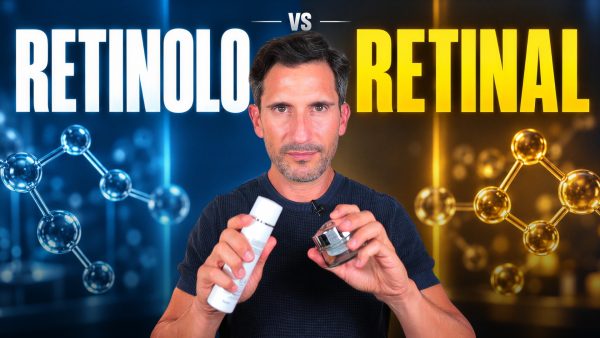
From Retinol to Retinaldehyde: Science, Biochemistry, and Tolerability of the New Gold Standard in Retinoids
In the vast landscape of cosmetic dermatology and at-home anti-aging treatments, retinoids continue to represent the absolute benchmark. Since their introduction, molecules like retinol have revolutionized the approach to skincare by stimulating cell turnover and collagen synthesis. However, scientific research never stops, and attention is now focused on an advanced derivative: retinaldehyde (or retinal). To fully understand why this active ingredient is redefining the boundaries of advanced skincare, it is necessary to analyze its biochemistry and behavior at the cutaneous level.
The Metabolic Pathway: Why Does Retinal Act Faster?
To exert their biological function within the skin, all topical retinoids must undergo a series of enzymatic conversions until they transform into their active form: retinoic acid. Traditional retinol requires a two-step process:
- It is first converted into retinaldehyde.
- Subsequently, retinaldehyde is converted into retinoic acid.
Retinaldehyde, on the other hand, literally does “half the work”: it sits just one metabolic step away from retinoic acid. This structural proximity translates into markedly superior efficiency. On the skin, retinal acts much faster than retinol, offering performance comparable to medical-grade molecules within an at-home cosmetic formulation.
The Clinical Paradox: Higher Potency, Yet Superior Tolerability
One of the most frequent questions in clinical practice concerns the relationship between an active ingredient’s efficacy and the risk of irritation. Historically, a more potent retinoid is expected to cause greater dryness, flaking, and redness (the classic retinization process).
With retinal, we encounter a fascinating clinical paradox: despite being markedly more potent and efficient than retinol, retinaldehyde is often paradoxically better tolerated even by sensitive skin. This phenomenon can be explained by two key factors:
- Shoter intermediate residence time: Requiring only a single conversion step reduces oxidative and metabolic stress on epidermal tissues.
- Intrinsic antimicrobial properties: Unlike retinol, retinal possesses natural biological activity against the bacteria responsible for blemishes (specifically Cutibacterium acnes). This characteristic makes it a formidable tool not only for combating skin aging, but also for treating mature combination or acne-prone skin, which often cannot tolerate traditional retinoids.
What Does It Actually Do to the Skin?
Incorporating retinaldehyde into an evening routine means acting on multiple fronts simultaneously:
- Epidermal Renewal: It accelerates the physiological desquamation of the stratum corneum, eliminating dead cells and revealing a fresher, more uniform complexion.
- Dermal Stimulation: It supports fibroblast activity, promoting the synthesis of new collagen and elastin fibers to combat loss of firmness and the depth of fine lines.
- Hyperpigmentation Control: It helps regulate the melanogenesis process, visibly improving the appearance of dark spots and imparting radiance to the skin’s texture.
In conclusion, retinal does not represent a mere alternative to retinol, but a true evolutionary leap: it combines potent efficacy with surprising tissue gentleness, redefining the standards of modern cosmetic dermatology.